From room to model
The study used Vivaan as a test room. The team varied fan speeds, window and blind positions, lighting, occupancy and cooling setpoints, then compared the recorded conditions with its model.
 IIT BOMBAY
2026 / Digital tools / Research in development
Inside Vivaan, students compare readings from five positions with a room model to study temperature, humidity, air movement and light.
THE QUESTION
Vivaan Digital Twin / DESIGN BRIEFTHE RESULT
65% fewer physical sensors
~90% accuracy reconstructing the room
DIGITAL TWIN / AN INTERACTIVE EXPLANATION
ILLUSTRATIVE NETWORK · NOT LIVE TELEMETRY
Temperature measurements help compare how conditions vary across the room and how the model estimates unmeasured positions.
SELECT A SENSOR POSITION IN THE ROOM
ESP32 sensor boards → Wi-Fi / MQTT → Raspberry Pi → model comparison.
The drawing explains how data travels from the room to the model.
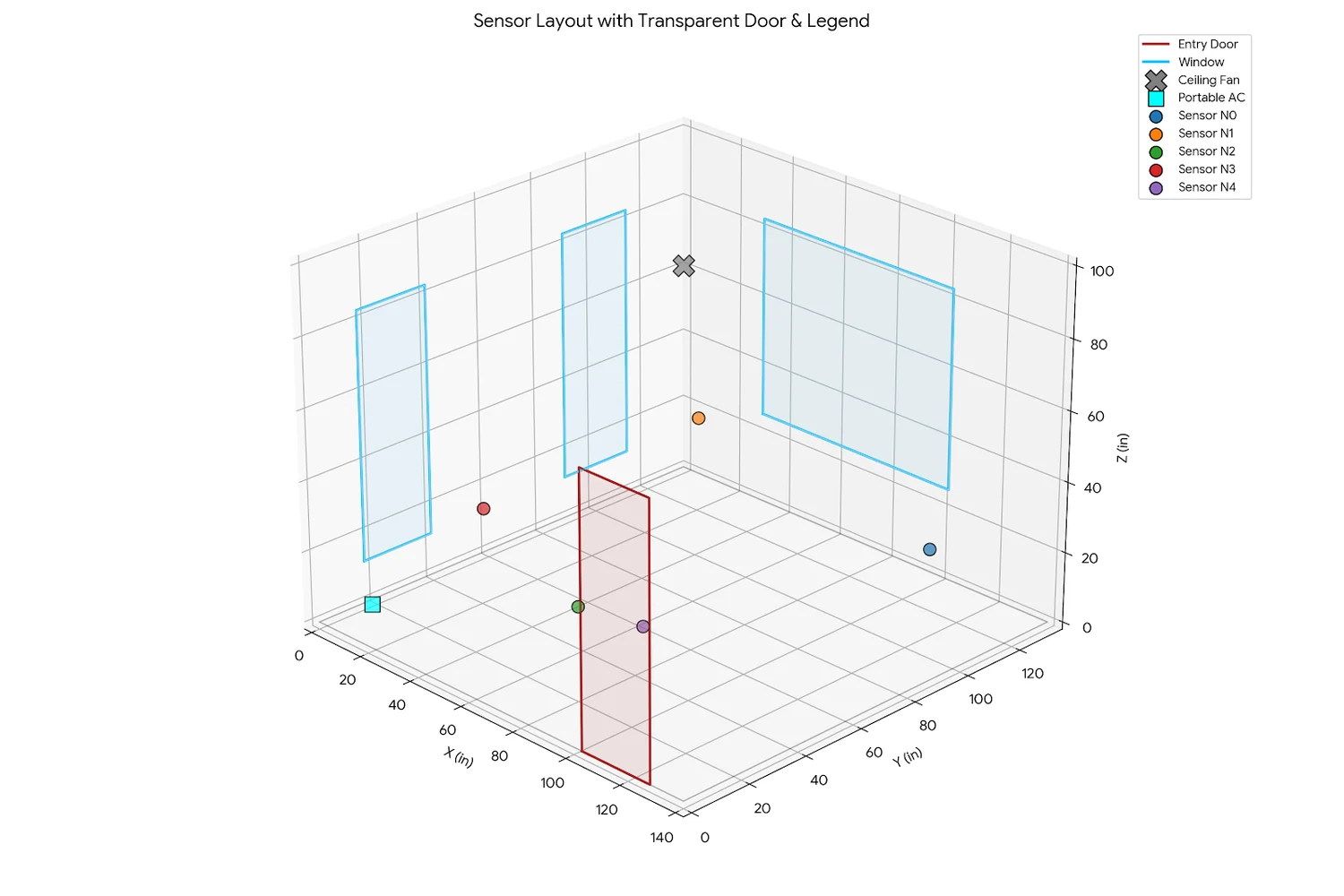
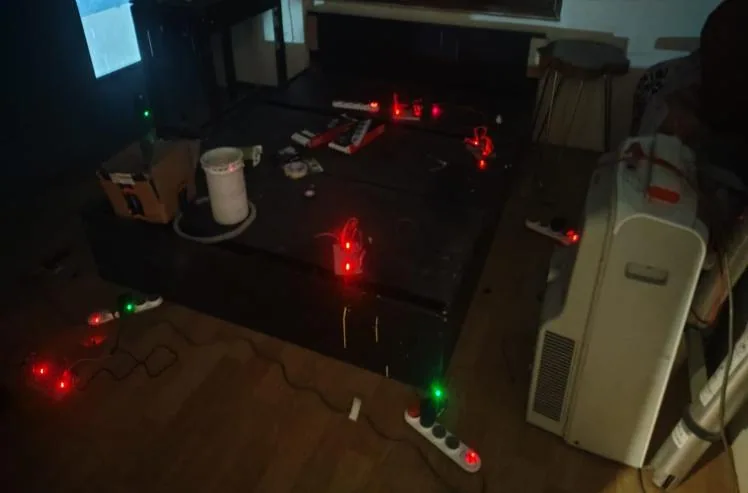
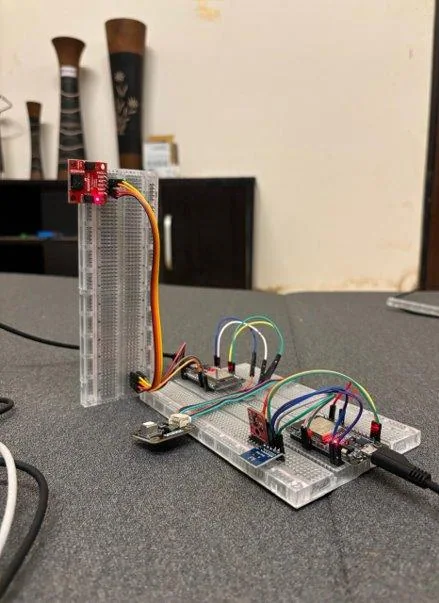
The study used Vivaan as a test room. The team varied fan speeds, window and blind positions, lighting, occupancy and cooling setpoints, then compared the recorded conditions with its model.
Sensor stacks recorded temperature, humidity, carbon dioxide, air speed and illuminance. ESP32 boards sent the readings over Wi-Fi using MQTT to a central Raspberry Pi.
In the reported room experiment, the team used one reference node each for temperature and relative humidity, two for carbon dioxide and three for illuminance to estimate values at five positions. Air-speed reconstruction was still under study.
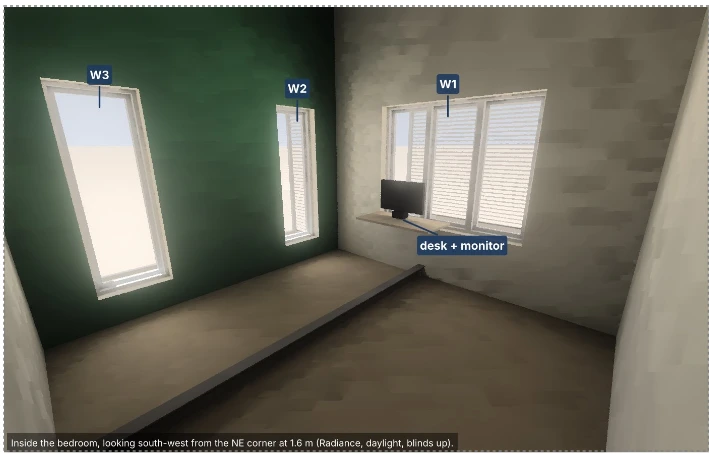
The lighting study separated daylight from artificial lighting. Window orientation, solar position and obstructions changed the illuminance gradient across the room, so the team included geometric features in its daylight models.
WHAT WE LEARNED
Performance depended on which quantity the team estimated. Its temperature and humidity estimates used fewer reference nodes than illuminance. The published presentation reports results for this room experiment.
PROJECT MILESTONE
The October 2026 room model documents the built window and blind arrangement separately from the March measurement campaign.
THE PEOPLE
Prerak Patidar prepared the bedroom lighting study. The wider sensor-deployment research credits Prabhat Sharma, Ramandeep Singh, Engidaw Getahun, Prerak Patidar, Anupama Kowli and Venkata Santosh Kumar Delhi.